Posts

Showing posts with the label Wire Rope Hoist Manufacturers

Functions and Effects of a Wire Rope Hoist

Image
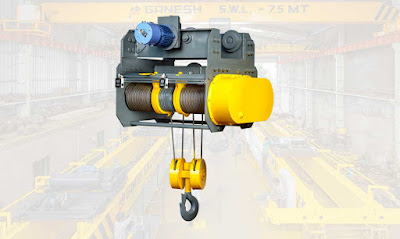
Wire Rope Hoist is common in places where big objects, like foundries, factories, and assembly lines, need to be lifted. These hoists are electrically powered and operate similarly to standard electric hoists, but they use steel chains to hoist objects of varied weights. Many factories rely on this machinery. Wire ropes replace typical chain hoists in the industrial sector due to their greater SWLs (safe working loads), making them better suited for heavy lifting. The Function Of A Wire Rope Hoist: A hook securely holds the object attached to the cable’s end. The pulley’s direction of motion is usually adjusted by an operator using a hand-operated motor unit. The hoists’ trolley systems allow the engine and pulley to move along a set path. Wire rope hoisting facilitates the lifting and lowering of a wide range of masses. The Positive Effects Of Using This Apparatus Many people prefer using Wire Rope Hoist over other hoists because of their many advantages. Some examples of these adva...
Wire Rope Hoist: Maintaining Wire Rope To Boost The Operations!

Image
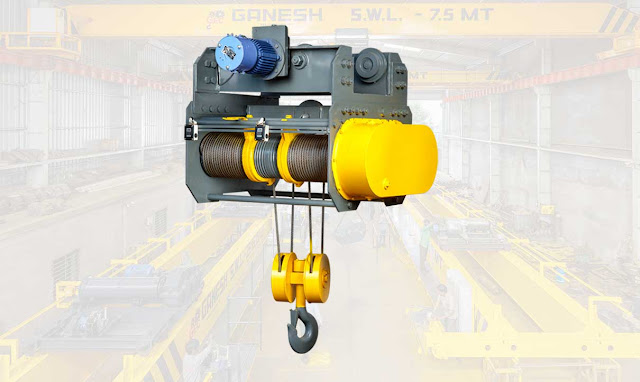
  Wire Rope Hoist is a lifting medium that finds use in various sectors in the modern world. This post summarises what they are, the primary hoists available, and the numerous advantages they offer over alternative hoisting methods. Continue reading if you are interested in learning more about this topic.  In either a maritime setting or for rigging purposes, Wire Rope Hoist sees a significant amount of usage. Throughout their service life, they get subjected to heavy loads, and as a result, they sustain significant mechanical damage. In addition, studies have revealed that the primary reason for wire rope failure is excessive degradation and corrosion, a lack of maintenance and inspection, and incorrect use, all of which result in premature discarding, decreased safety, and increased costs associated with replacement.  Why Is Wire Rope Hoist Maintenance Important?   It is essential for the effective and secure operation of steel wire ropes that they be properly ma...

Knowing About Wire Rope Hoist will Profit your Construction Business

Image
Wire Rope Hoist is a famous product in the market that can lift the weight of 20 tons with ease. The product is reliable and can work in most weight lifting locations around the globe. You can use the equipment for your building construction or runway and it will adjust with comfort. Let’s dig into the tool further to figure out how you can benefit your business with this. What is Wire Rope Hoist? It’s a device that includes the vertical shifts of the objects and for hanging the loads. This device will work by distributing the weight using the gears or the pulleys and transferring the low range to the long and short distances.  Best Wire Rope Hoist Types with their Uses Fix Type of Hoist We use this type of hoist when the machine requires a vertical motion for handling. This hoist is mounted at the top of the building, where the material is lifted at diverse floor levels.  Push-Pull Hoist This equipment comes with a hand-operated trolley that has wheels for easing up the late...

Wire Rope Hoist - Meaning, Types and more.

Image
Among various industrial equipment, wire rope hoist is one of the most common and demanded one. The equipment is made up of a steel rope drum that works with the help of a wire rope. The overall system experiences motion with the help of a motor and is used mostly for lifting different items.  Types of Wire Rope Hoist There are mainly three types of wire ropes. These are stainless steel, coated wire ropes and galvanized wire ropes. In terms of hoists, you will find hand chain hoists, electric wire rope hoists , hook mounted hoists, lever hoists, lineman’s hoists and air chain hoists as one of the most common hoists in all. Speaking further, hoisting equipment include movable pulleys, mobile cranes, tower cranes, rope and pulleys etc.  Important points to consider while using a wire rope hoist- Check the voltage thoroughly. Make sure there is not even a slightest of default in either the voltage or speed of the equipment.  Check the amount of lubrication. Check for tangle...